
One of the applications that you may hear about to keep your online connection more secure is a virtual private network (VPN). This is a service that basically takes your internet connection and reroutes it through its own servers before connecting you online. Many VPNs are advertised using FUD (fear, uncertainty, doubt) tactics. These companies make promises of encrypting your online connection and keeping your data safe. However, some of them have been found to be not very private after … [Read more...]
February 1, 2022 By Computer Techs
January 14, 2022 By Computer Techs
How Did My Password End Up in a Data Breach?
Updated August 2024: Most of us will have experienced a data breach at one point or another. Maybe you’ve received an email from a identity monitoring service telling you that one of your passwords has been compromised. Or perhaps your password manager has notified you that one of more of your passwords has been detected in a data breach of a website that you've registered with. It can be worrying to receive these notifications. You’ll likely wonder how your password ended up in a breach … [Read more...]
December 27, 2021 By Computer Techs
Keep your mobile phone number safe from hackers
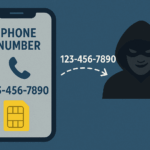
Updated 7/3/25 with new information: Your mobile phone number has become increasingly valuable because it’s the way that hackers can gain access to your online financial, email and social media accounts. We now are encouraged to use our smartphone and attached phone number to prove who we are – often via Multi-Factor Authentication (MFA), a method that requires not only entering your username/email address and password into a website, but also entering a code or responding to a prompt sent to … [Read more...]
October 7, 2021 By Computer Techs
May 25, 2021 By Computer Techs
Spend a few minutes to check out these scams so that you don’t become a victim

Updated June 2025: Scammers are becoming increasingly clever. Every month we hear from clients who have been scammed by letting someone take control of their computer and coerce them into paying for support for non-existent computer or account-related problems. With a little bit of knowledge of how these scams work, you won't become a victim yourself. Scams typically start with a website pop-up, email, phone call or text message from a well-known company such as Amazon, … [Read more...]
May 25, 2021 By Computer Techs
Listen to these recordings of scam calls so that you can recognize them and not fall victim
Please listen to our recordings of scam calls and messages that you’ll likely receive at some point in time, so that you can become familiar with the scams and not fall victim to them. Click the orange Play button below, or listen to all uploaded Scam calls on clyp.it. … [Read more...]
March 24, 2021 By Computer Techs
Internet crimes up over 69% in 2020: Phishing scams more than double and people over 60 the most common victims
The FBI’s Internet Crime Complaint Center has released its annual report. The 2020 Internet Crime Report includes information from 791,790 complaints of suspected internet crime—an increase of more than 300,000 complaints from 2019—and reported losses exceeding $4.2 billion. Topping the list of types of reported internet crimes was phishing, which more than doubled last year. People over 60 were the most common victims according to the report. Nevada had the 8th most complaints of … [Read more...]
February 17, 2021 By Computer Techs
FTC Identity Theft website guides victims through the recovery process
If you’ve been a victim of identity theft, the Federal Trade Commission’s IdentityTheft.gov is the federal government’s one-stop resource for identity theft victims. The site provides streamlined checklists and sample letters to guide you through the recovery process. If you haven’t been a victim, read these tips to help keep your identity from being stolen or compromised in the first place: Prevent Identity Theft. … [Read more...]
December 24, 2020 By Computer Techs
Massive government and business computer hack will likely effect home users too – What you need to do
A massive government and business computer hack was discovered early this month (December 2020), but the long term effects likely won’t be known for months or years as more knowledge is obtained about what companies were affected and what data may have been (or will be) breached. Early details of the hack are explained in these comprehensive articles from CNN and CNET. The hack was spread to thousands of computer systems, altogether likely containing the private data of a … [Read more...]
September 1, 2020 By Computer Techs
How to create a secure memorable password system
Originally posted January 2010. Updated September 2020: To help prevent unauthorized access to personal information, many websites require a password that consists of six or more characters, numbers and letters, and uppercase and lowercase letters. Creating a password that meets the requirements and being something you can remember doesn’t have to be a challenge. I have created a password system that you can use or modify to create memorable passwords. The most important part of the system … [Read more...]