
Why Cutting Off a Phone Number Could Lock You Out of Your Digital Life
Canceling a phone number feels like a simple way to cut unnecessary monthly bills. Whether you are streamlining your household expenses, switching carriers, or handling the administrative closure of a loved one’s estate, dropping an unused landline or mobile service seems straightforward.
However, in an era where online security relies heavily on mobile authentication, disconnecting a number can trigger a cascade of permanent lockouts across financial, medical, and personal accounts.
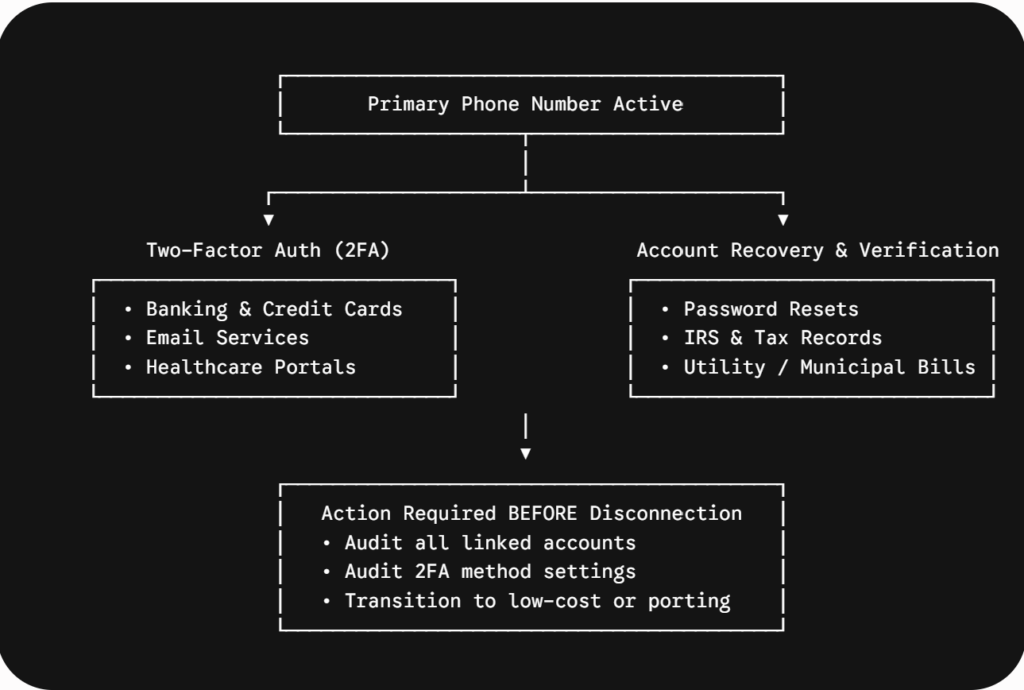
The Critical Role of Phone Numbers in Digital Identity
Modern identity verification treats phone numbers as trusted security endpoints. When you request a password reset or sign into a new device, platforms assume the person holding the registered phone number is the authorized owner.
Two-Factor Authentication (2FA)
SMS-based codes remain the default secondary verification method for major platforms, including banks, investment portals, email providers, and government agencies like the IRS. If a number is deactivated, these verification codes land in a black hole, cutting off access.
Account Recovery Loops
Many services use a secondary phone number to verify your identity if you forget a password. If both the password and the associated recovery number are lost, account recovery can often become impossible.
The Deceased Loved One’s Line: Why You Must Keep It Active
One of the most devastating digital mistakes occurs after the death of a family member. Surviving family members or estate executors may choose to cancel the deceased person’s mobile or landline service right away to stop ongoing billing.
Doing this creates immediate roadblocks during estate settlement:
- Locked Financial Accounts: Settling balances, retrieving tax documents, or transferring funds typically requires logging into online portals guarded by 2FA sent to the deceased’s mobile device.
- Inaccessible Cloud Data: Photos, documents, and personal history stored in Google, Apple, or Microsoft accounts often require SMS checks to reset credentials or verify new login locations.
- Loss of the Number to a Stranger: Telecom carriers recycle disconnected numbers—sometimes in as little as 30 to 90 days. Once reassigned, a stranger receives those security texts and may gain unauthorized recovery access to personal platforms.
Key Rule for Estates: Keep the deceased person’s phone line active for at least 6 to 12 months while navigating probate and closing accounts.
Pre-Cancellation Audit Checklist
Actions to take before canceling a phone line:
- Audit All Logins
Check every primary digital service: email, banking, credit cards, retirement accounts, healthcare portals, insurance providers, social media, and utility accounts. Update the registered phone number to a currently active line. - Transition Away from SMS 2FA
Where possible, switch security verification from SMS to authenticator apps (e.g., Google Authenticator, Authy, or the iOS Passwords app) or hardware security keys. Authenticator apps depend on the device hardware or cloud sync, not the underlying mobile carrier service which can be susceptible to unauthorized number/SIM swaps. - Generate Backup Recovery Codes
Services like Google, Apple, and password managers provide printable emergency recovery keys. Store these securely in a theft and fire-proof safe place before canceling the phone line. - Downgrade to a Minimal Plan
If you must maintain a number solely for security verification or estate settlement, downgrade the plan or port the number to a low-cost prepaid MVNO provider. This preserves the security endpoint for a minimal monthly cost. - Beware of VoIP Restrictions for 2FA
While porting a landline or mobile line to a free or low-cost VoIP service (like Google Voice) seems ideal, many financial institutions refuse to send 2FA codes to VoIP numbers for fraud prevention. Test whether your essential institutions accept VoIP SMS before canceling the original carrier plan.
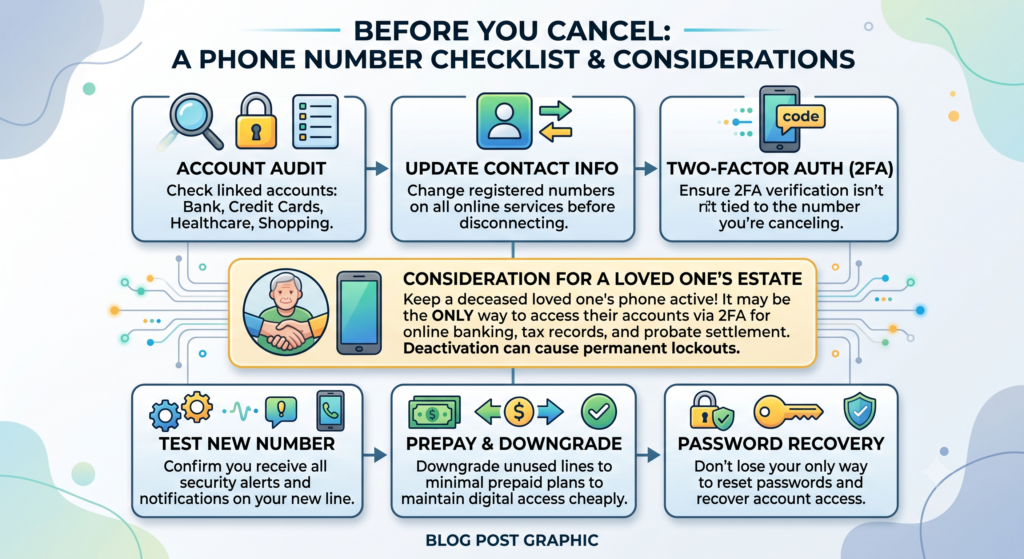
Disconnecting a long-held phone number without auditing its linked accounts can create severe digital consequences. Taking the time to update authentication methods first ensures that cutting a line doesn’t mean cutting yourself off from essential records and services. If you need help with online accounts and using your phone number as secondary authentication (2FA) or account recovery, contact Computer Techs for help.