
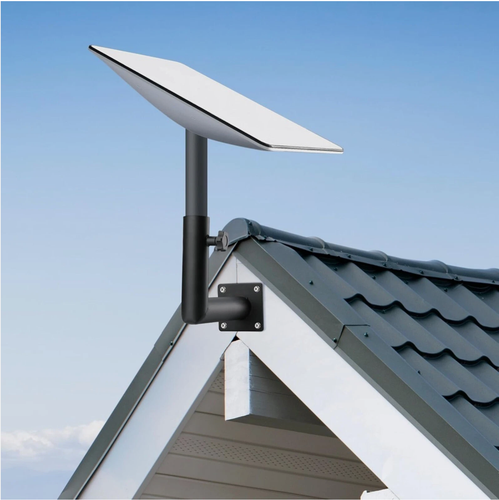
For decades, satellite internet was the network of last resort—a slow, laggy, and expensive lifeline for those living too far from the grid. But the launch of Low Earth Orbit (LEO) satellite constellations, pioneered by SpaceX’s Starlink and joined by Amazon’s Leo, has rewritten the rules.
These networks beam high-speed, low-latency internet from thousands of small satellites orbiting close to the Earth. While they are game-changers for remote cabins in the Sierra Nevadas, a growing number of city dwellers are wondering if it’s time to ditch their traditional ground-based internet providers.
If you live in an urban or suburban area like Reno/Sparks, is switching to a satellite provider—or a new 5G wireless provider—actually a smart move?
The Pros: Why Urbanites Are Looking to the Stars
1. Breaking the Local Monopoly
In many mid-sized cities, internet choices have often been limited to a telco provider using copper wires and a cable provider using coax to deliver internet service to most residences. LEO satellite internet introduces a viable competitive alternative, and possibly freeing consumers from promotional pricing traps, hidden fees, and regional monopolies.
2. Infrastructure Independence
Because your connection comes from space, LEO internet bypasses local terrestrial infrastructure. If a construction crew severs a fiber-optic trunk line in downtown Reno, or if a severe winter storm knocks out local utility poles, satellite internet will stay online—provided you have a backup power source.
3. Portability and Flexibility
Most LEO satellite plans offer “roaming” or portability options. With a portable satellite antenna, you could move the antenna between your yard, roof, RV or car.
The Cons: The Reality of City Satellite
1. Network Congestion and “Cell” Limits
Satellite networks divide the ground into geographic “cells.” In an urban area like Reno, hundreds or thousands of users trying to pull data from the same passing satellite during evening peak hours can lead to noticeable slowdowns.
2. The Obstruction Problem
LEO satellites require a wide, completely unobstructed view of the sky to maintain a continuous connection. Tall neighboring buildings, and dense urban tree canopies will block or interrupt the signal, causing micro-drops that will disconnect Zoom calls or cause video streaming to buffer.
3. Higher Costs
To get people to try the service, LEO satellite services often have low limited-time promotional “teaser” rates, and free/discounted installation. But satellite providers usually charge up-front ~$200-$400 for the necessary equipment. Also, after the promotional period, monthly service rates are typically around $50/month for limited data/speed and closer to $120/month for unlimited data/speed.
The 5G Middle Ground: Fixed Wireless Access (FWA)
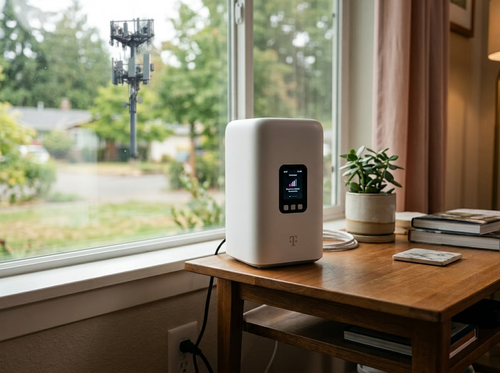
Before looking to the stars, many urbanites are turning to the cell towers in their own neighborhoods. Fixed Wireless Access (FWA) services like T-Mobile 5G Home Internet, Verizon 5G Home, and AT&T Internet Air have aggressively entered the market.
FWA leverages modern 5G cell sites and Massive MIMO antennas to beam broadband directly to a receiver in your home. If you have a good signal from a nearby cell site, speeds often vary from 100-400 Mbps – plenty fast for streaming video and other high-speed internet demands. FWA is often the cheapest option available, frequently priced around $40 to $60 a month, with no upfront equipment fees.
However, FWA shares a critical flaw with satellite: wireless congestion. During peak hours, cellular networks prioritize mobile phone traffic over home internet data. If a local tower gets congested, FWA speeds can plummet, and latency can become too erratic for competitive gaming or latency-sensitive network applications.
The Verdict for Reno Residents: Hardwired Reliability Still Wears the Crown
When evaluating LEO satellites and 5G FWA against terrestrial options, the winner depends on your exact address—but for pure performance, physical fiber and coax cables still typically dominate for speed and reliability.
| Feature | Urban Fiber/Cable (AT&T/Spectrum) | 5G FWA (T-Mobile/Verizon/AT&T) | LEO Satellite (Starlink/Amazon Leo) |
| Reliability & Latency | Highest (Rock solid) | Moderate (Varies by tower traffic) | Moderate (Varies by weather/obstructions) |
| Monthly Cost | ~$70 – $100+ | ~$40 – $60 (Cheapest) | ~$50 – $120 |
| Upfront Cost | Low to None | Low to None | High ($300 – $600+) |
| Top Speeds | Up to 1,000+ Mbps (Consistent) | 100 – 300 Mbps (Fluctuates) | 100 – 200 Mbps (Fluctuates) |
Who should get Satellite or FWA?
If you live on the sprawling outskirts of the Reno-Sparks area where fiber hasn’t reached and cable degrades, LEO satellite or a strong 5G FWA connection are incredible upgrades. FWA is the budget-friendly champion if you have a good line of sight to a tower, while satellite is the ultimate backup and portable solution.
Why Fiber and Cable remain the best:
If you live in a dense Reno neighborhood where AT&T Fiber or high-speed Spectrum cable is available, terrestrial internet remains vastly superior. While traditional wired plans are likely to be more expensive than 5G home internet, the premium may be worth it for the unmatched reliability.
Wireless signals—whether bouncing off the ionosphere or a local cell tower—are vulnerable to weather, physical obstructions, and network deprioritization. For those needing robust home networks, a direct fiber connection paired with high-end WiFi or a managed mesh system offers a rock-solid, low-latency foundation that wireless alternatives simply cannot match. Direct fiber and cable will almost always beat satellite and FWA in uptime and peak-hour consistency.
If you need help deciding and configuring internet service to the devices in your home, contact Computer Techs for an in-home consulatation.