Microsoft’s Windows 10 became available on July 29, and we’ve helped several clients who have purchased a new computer or upgraded their existing computer from Windows 7 or 8/8.1. On older computers Microsoft’s notification invites users to register to download a free upgrade to Windows 10 – an offer which will be good until July 2016. But just because it’s free doesn’t mean that you should do the upgrade.
The Good: Windows 10 is an improvement over Windows 8/8.1. It brings back a “Start” menu that is more like what Windows 7 had. It also brings back the Windows 7 Backup & Restore feature. New to Windows 10 is improved search capabilities, and a new voice powered virtual assistant, Cortana, that you can speak with if your computer has a microphone. Though it’s fun to use for a little while – it’s likely that many will rarely use the feature.
The Bad: If you want to use the virtual assistant or Microsoft’s OneDrive cloud file sync service, you must register for a Microsoft account (if you don’t already have one). Using your computer with a Microsoft account requires you to enter a password or PIN each time you start your computer. Also Windows 10 still has two different user interfaces for adjusting settings which can make things hard-to-find and confusing. The icon for Microsoft’s new Edge web browser looks very similar to the icon for Internet Explorer – which is now hidden by default. If you decide to use the Edge browser, any website that requires a plugin – such as Flash Player or Java – will not work in Edge.
Microsoft has included the Microsoft Solitaire Collection card games in Windows 10, and playing the games also requires that your computer be signed into your Microsoft account. But unlike the version included with Windows 7, it now displays advertisements. You can remove the ads for $1.49/month or $9.99/year.
The Ugly: If your computer has Windows 7, Windows 10 is a dramatic change to what you are used to using. Some manufacturers will not be releasing drivers for Windows 10, which means things like your keyboard, printer or video card may not work properly or at all.
Should you upgrade to Windows 10? If your computer has Windows 7 – we recommend that you don’t install Windows 10 and just stay with Windows 7 until the year 2020. If you’ve got Windows 8/8.1 – don’t upgrade to Windows 10 yet. Let’s wait a few months for Microsoft and hardware manufacturers to get some of the glitches fixed, drivers released and upgrade process smoothed out.
Below is a scenario that we hear about many times each month – it could happen to you.
You’ve just spoken on the phone with someone claiming to be from Microsoft, Amazon, your Internet provider or other well-known company. You’ve given the stranger remote access to your computer and they’ve shown you a bunch of things that’s wrong with it – errors, security or firewall problems, exposed social security numbers, or even offered to help transfer funds to or from your bank account. But they have a “fix” – they can remedy the “problems” for a few hundred dollars. You may or may not have gone so far as given out your credit card number or purchased gift cards for payment, but the damage has already been done. Sometimes it happens so quickly and convincingly that you may not realize that you’ve been conned until long after you’ve hung up the phone.
You’ve let a stranger get into your personal business. What should you do now? You should immediately turn off your computer or device that was remotely accessed – then call Computer Techs or another honest, reliable and local computer professional. Don’t be embarrassed – the con artists are good at what they do and are very persuasive and convincing. Millions of people get scammed by these telemarketers each year. Computer Techs will check your computer for data they may have compromised or malicious programs left behind – such as stolen or changed passwords, deleted files, changed settings, malware or remote access tools.
In a matter of minutes a scammer can obtain or change passwords, purchase goods or services on your behalf, create accounts, or obtain passwords and credit card numbers stored in your web browser.
If you’ve allowed someone you don’t know to remotely control your computer – no matter what company they say they’re from – please contact us ASAP so that we can make sure that you’re computer is safe to use.
Since you’ve read this far, if you haven’t let a stranger remotely access your computer – please read how to avoid fake tech support calls in the first place.
We appreciate the opportunity to help you with each service call. Nonetheless each month we get dozens of calls that could have been avoided had the caller read our monthly newsletter. Below are the most common types of calls that could have been avoided:
Tech support phone and internet search scams
It starts with a call to or from an official sounding computer company representative. Maybe you saw a pop-up on your screen telling you to call a toll-free number. The remote “technician” usually with a foreign accent wants to take control of your computer to show you problems or offer to fix a problem that you had called about. After he or she is allowed remote control, they show you a bunch of scary problems with the computer then offer to “fix” the problems for a few hundred dollars. If they sense you’re getting skeptical, sometimes they’ll quickly put a password on your computer and lock you out, delete your files, or install spyware or malware.
How can this be avoided? Never let anyone that you don’t know take remotely control of your computer. If someone calls you telling you they detect problems with your computer, tell them you don’t have a computer then hang up.
It starts with a pop-up telling you that you need to update a program. Or maybe you’re looking for a program that someone told you about. When searching the internet for that program, you might click the first result you see and accept all the agreements without thoroughly reading everything. The next thing you notice is that your browser home page has changed, you’ve got extra icons on your desktop and you’re getting more pop-ups than before.
How can this be avoided? Don’t download anything from a website unless you specifically went looking for it. When searching the internet, scroll past the ad results and look for the official website to download programs. When installing programs, read each screen thoroughly and uncheck all optional extras such as browser toolbars or tuneup programs.
Letting many little problems build up into one big problem
It starts with your computer acting more slowly than before. Perhaps there are extra icons on your desktop that you don’t recognize. Maybe your browser home page has changed or you’re getting more pop-up ads. The longer little things like this are left unchecked, it can lead up to bigger problems down the road. Adware that starts letting other malicious software in can also alter your internet search results. Occasional slow downs can be hard drive errors that eventually lead to a complete failure or “crash” of the hard drive, and loss of personal data.
How can this be avoided? Once you start noticing unusual behavior with your computer, call Computer Techs sooner than later. A regularly scheduled check-up is less expensive than the hundreds of dollars it can cost to remove a nasty virus or replacing a hard drive that has completely failed. Consider our Quarterly Maintenance Plan to detect easy-to-fix issues before they become major problems.
Phishing emails attempt to gather personal information such as passwords, account information or credit card numbers. The emails appear to be from a legitimate source – your bank, internet or email provider, or a business that you may have a credit card on file with. They are often designed to mimic the appearance of a legitimate business including company email addresses and logos. But with a closer look, you can often spot phishing emails from some of the characteristics listed below.
In any email that you receive, you should never click on a link in an email in which you are not 100% sure that the email came from the identified sender – and you know and trust that sender. If in doubt, contact them by typing their website address into your web browser and look for contact information on their website. No legitimate company will ask for a password or financial information via an unsolicited email or phone call.
In the example above there are several characteristics that identify that the email is a phishing attempt:
Grammar – notice the sentence “Please you are to fill in the below informations to validate…”
Punctuation – Look for words that should/should not be capitalized, periods and commas in the wrong place, spaces that should/should not exist. Analyze it like your school English teacher would.
“From” – When hovering over the “From” address, it displays “web_upgrade2dsk@…” A legitimate email will be come from addresses such as “info@[company].com” or “customerservice@[company].com”. However the email address that it’s coming from should not be your only determination whether or not an email is real since an email address is easy for spammers/hackers to spoof.
“To” and greeting – The email shown is addressed to “undisclosed recipients” and “account owner”. – A company that you already do business with will send an email addressed to your email address and name.
A scare tactic – “Failure to follow this process … result in loss of important information”.
A sense of urgency for immediate action – “…exceeded the set storage limit”
Personal/private information – A company that you do business with already knows your name, email address, password, etc. Unless you are logging into your account on their official website, they would not ask you to enter it into an email or web form and send it back to them.
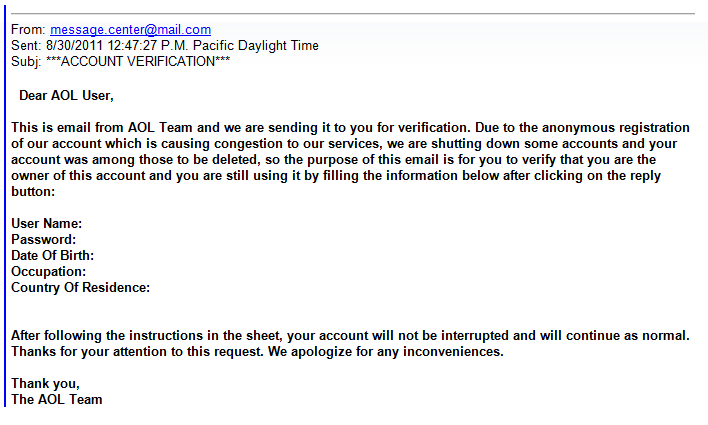
In the above example from “AOL” above, what characteristics do you see that it is a phishing email? Please post a note in the comments below.
This official-looking email includes bank logos and it appears to come from a bank email address. Yet if you carefully read the message in the email, grammatical and capitalization errors give a clue that this email did not come from a billion-dollar corporation. This email is attempting to get you to enter banking information into a form and opening an attachment to install a virus .
Some people think that nobody would be interested in reading their email, so their email password doesn’t need to be secure. However if a hacker accesses your email consider the following common occurrences:
A hacker can change your password and lock you out of your account.
A hacker can go to financial and shopping websites and have password reset requests sent to your email address. With access to your financially related websites in the hands of a bad guy, you could potentially lose thousands of dollars.
A hacker can copy your contact list and/or send emails on your behalf asking for money or send spam and malware that appears to come from you.
I suggest reading this more in-depth article by security researcher and former Washington Post reporter, Brian Krebs: The Value of a Hacked Email Account.
Most households have multiple computing devices these days – such as desktops, laptops, smartphones and tablet portable devices – and many want the ability to synchronize files between their devices.
There are many companies that offer cloud (aka “over the internet”) syncing and storage services. In this article I highlight 3 of the most popular – Google Drive, Microsoft OneDrive and Dropbox. All 3 of these services will backup and sync one folder and any sub-folders within it. Your computer can be configured to store your pre-existing folders of Documents, Pictures. Music, etc. inside the synced folder. Since the files are accessible from multiple devices and your personal web site means that those files are backed up and accessible should one or more of your devices become damaged, lost or stolen.
Some of the main features and benefits of the services include:
2-15 GB of online storage for free, with paid plans for more storage as needed.
Automatically syncs when new files or changes are detected.
Work on files even if you’re temporarily not connected to the Internet. Your changes sync once your computer has an Internet connection again.
A majority of our customers already take advantage of our remote support service
Remote Support allows us to see your computer screen and operate your keyboard and mouse via your internet connection. This can be helpful if you need a quick-fix to a problem, question or other service that doesn’t require an in-home visit. Or perhaps you’d like service outside of our normal in-home daytime business hours. With Remote Support we offer lower rates than coming out to your home. Payment can be made via credit card on our secure webpage at the completion of the service.
Remote Support is available for most services, including (but not limited to):
Troubleshoot web browser redirects and fake scare warning screens
Help with recovery of forgotten passwords and hacked accounts
Virus/malware/adware/pop-up scan/removal
PC slowdown issues
Software installation and troubleshooting problems
Microsoft Office help
Data backup and recovery
Preventative/proactive maintenance
Email setup/customization
Training/tutoring
Remote support is not available if you don’t have a connection to the internet. Please contact us if you have questions.
To get started, while talking with your technician on the phone we will have you go to our web page at CTreno.com/help then download and run the “Remote Support” program. You will be presented with an ID and temporary passcode to tell us, which will allow us temporarily access to your computer only for the duration of the call. You’ll be able to watch everything being done on your computer just as if we were there in person.
If your computer is slow or freezing up, your internet is not working or you can’t print – before calling for help there’s often some troubleshooting you can do that will likely fix the problem. Please Print This Article and keep the printed page near your computer for future reference.
Computer won’t power on
If it’s a desktop computer, unplug the power cord to your computer for at least 30 seconds, then plug it back in and see if it will then turn on via the power button. If it’s a laptop, tablet or smartphone, press and hold the power button until you see it turn on. If you’ve held the power button for at least 20-seconds, release and try again.
Computer freezing up, non-responsive or showing you error messages
Turn off or restart your computer. This will often fix problems by clearing out the computer’s temporary memory and giving the computer a fresh start. If your computer will not shut off normally you can press and hold the power button on the computer until it shuts off (usually after about 5 seconds).
You’re seeing a scary warning message that you’re computer is blocked, with instructions to call a phone number
It’s a scam designed you to scare you into calling the number – a scammer. See this article for instructions on how to get rid of the scare screen.
Can’t connect to the internet
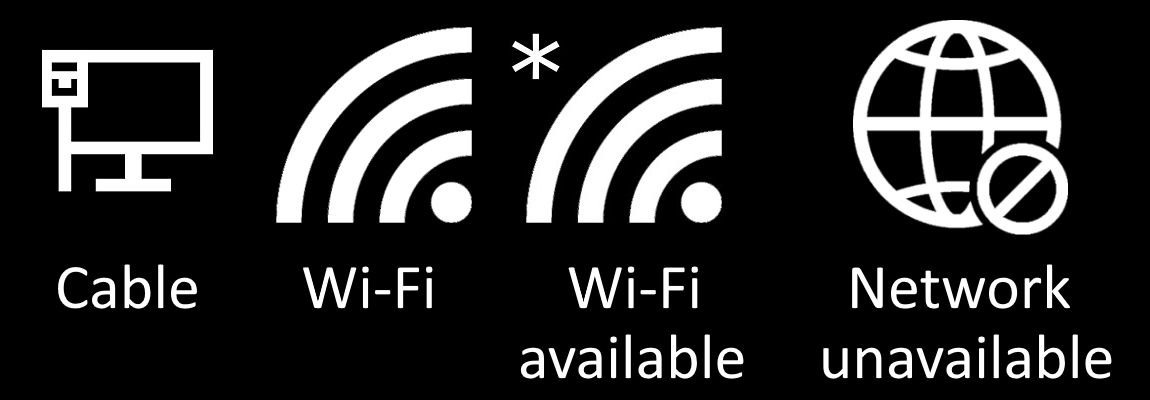
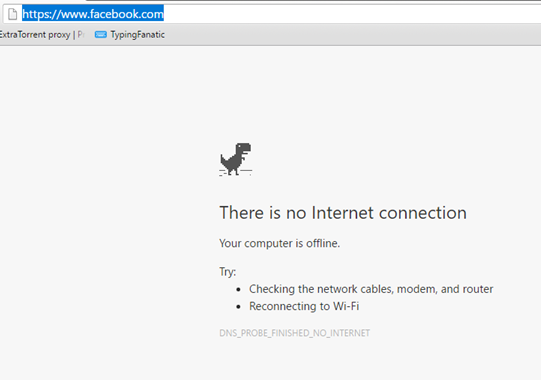
First, check the network status icon in taskbar. If you see the Network unavailable icon that looks like a globe, there’s a problem with your internet connection. If you see the Wi-Fi available icon, you’re not connected to your wireless router. Go to the next steps to continue…
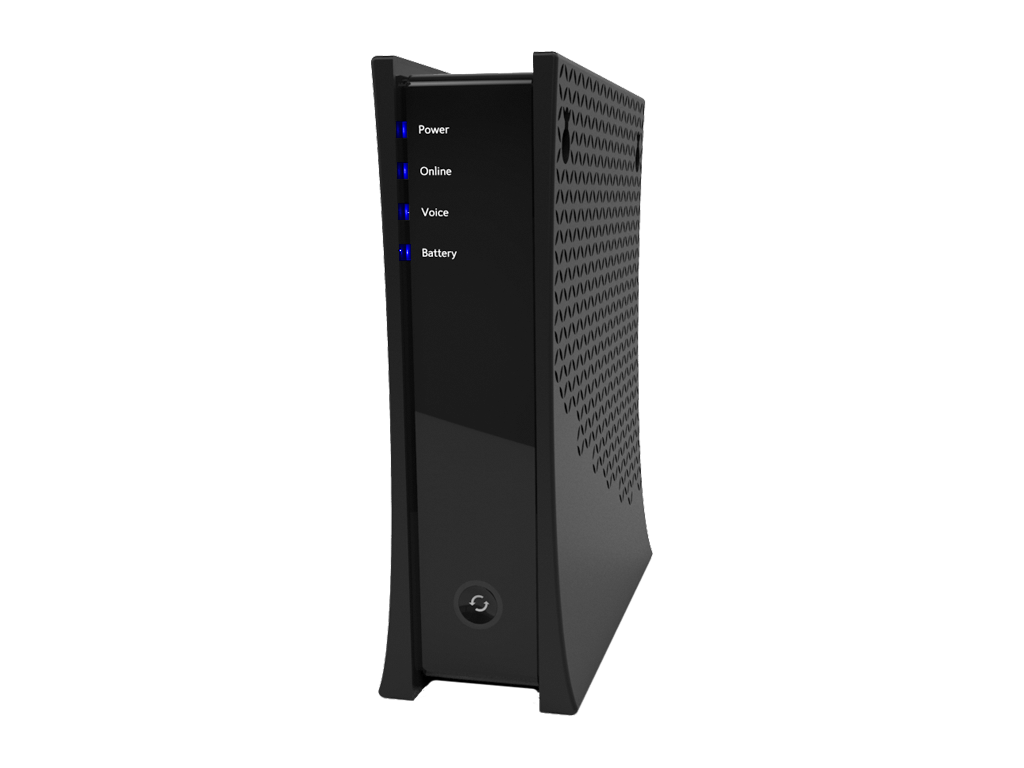
Are all the lights on your internet modem and/or router lit and their normal color? If not, turning off or unplugging the power to your modem and/or router for a minute will often fix internet connection problems. If you have a router, power-on your internet modem first – wait a minute for all the lights to come on – then power-on your router. If all the lights on your router and/or modem look normal, then maybe it’s a problem with your internet browser (see the next step).
Can you reach some/none websites in your browser?
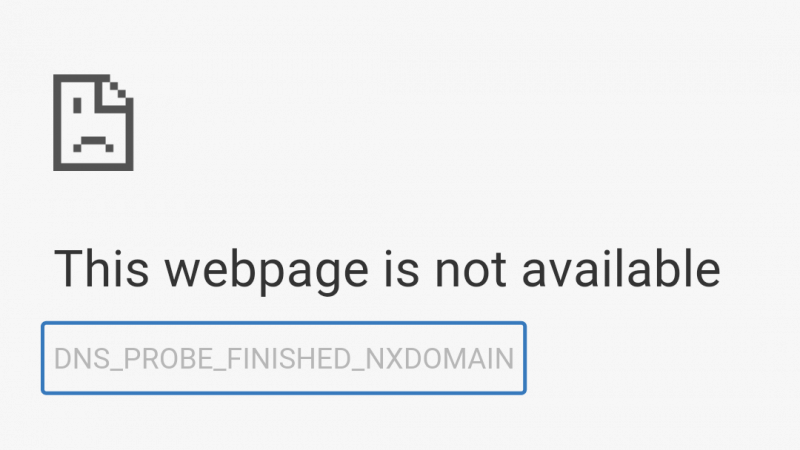
If you’re seeing “This webpage is not available”, it may just be a problem wIth the specific webpage or homepage that you’re trying to view. Try navigating to a different website.
If you can’t access any websites, and it doesn’t say “no internet connection”, it could be a problem with the specific web browser that you’re currently using. The most common web browsers are Google Chrome, Mozilla Firefox, Microsoft Edge and Apple Safari. If a web page does not display normally (or at all) in your usual web browser, try using a different browser to go to the website(s) that are not working.
Printer not working
If nothing happens when you try to print, make sure you are printing to the correct printer. When in the print preview screen, double-check to make sure your Printer/Destination is selected accordingly. If there is no communication between the computer and printer, turn off the printer then back on. Otherwise, unplug the power to the printer, then plug it back in.
Printed pages are blank, have streaks not printing all colors? Print this test page, then compare the printed output vs. what you see on your screen. You may need to clean the printer’s print heads or change the ink(s). Refer to your printer manual for instructions.
For further printer troubleshooting, see this article.
Can’t send/receive email?
First check your internet connection (above).
If you use an email program such as Windows Mail, Outlook or Apple Mail, check to see if you’re able to send/receive email via your webmail – see below for the web address for the most common email services*.
Are you getting an error message about your password being incorrect? If so, type in your current password where prompted.
If it appears that only some of your email is coming in or out, try sending an email to yourself to see if you receive it back.
We recommend having email with more than one provider for times when one of your email services may not be working. You can sign up for a free email account with Google’s Gmail, or Microsoft’s Outlook.com.
* Type the following address into your web browser address bar to access the webmail version of common email providers: Yahoo or AT&T/Yahoo Mail: mail.yahoo.com Gmail: gmail.com AOL mail: mail.aol.com Charter/Spectrum email: webmail.spectrum.net Microsoft Hotmail/Outlook.com: outlook.com
When all else fails…
If the above steps do not solve your problem, please contact Computer Techs. See our website for contact information or call the number on your tech’s business card.
For several years we’ve been warning people about tech support scams where someone claiming to be from Microsoft, your internet service provider or computer manufacturer calls to inform you that your computer is in danger and filled with trojan viruses or critical errors, or that your Windows license has expired.
In a later twist, shady companies began advertising on Google, Yahoo, Bing and other websites targeting search terms such as “HP tech support number” in hopes that vulnerable computer users would call them. After calling the number the representative would say that in order to help with the problem they would need to remote access to the computer. See examples in this article. Then just like the unsolicited calls from “Microsoft” above, you are lead to believe that your computer is infected.
Recently shady companies are now advertising on mobile search websites targeting search terms such as “Android tech support” or “iPhone tech support”. Similar to other tech support scams, after calling the number you are told to connect your smartphone to your computer then allow them remote access to your computer. You are then led to believe that trojan viruses on your computer are the cause of your smartphone troubles, and they offer to “fix” your computer.
Below are links to instructions for changing your password at most major email providers. Please review how to safely manage your passwords when creating a new password.
If you access email on your smart phone, tablet or email program on your computer, don’t forget to update the password that is stored on those device(s) with the new password you created in the steps above.


 Print This Article



 In a
In a